The Mill at Anselma

A National Historic Landmark


Restoration. . .

Since its inception, the Mill Trust has raised over $1.6 million to restore the Mill and its surrounding landscape, including prestigious grants from the Save America’s Treasures Program of the National Park Service, the Heritage Philadelphia Program of The Pew Charitable Trusts, the William Penn Foundation, and the Pennsylvania Historical and Museum Commission, as well as significant local support through West Pikeland Township. It is the Mill Trust’s vision to create an innovative historical attraction at the Mill at Anselma that demonstrates through sensory experiences, the evolution of technology and the impact of change in commerce, free enterprise and transportation on American life over three centuries for schoolchildren, families, scholars, visitors and local residents. A Site Master Plan completed in 2001 has directed the strategic development of the historic mill and its surrounding buildings and landscape.

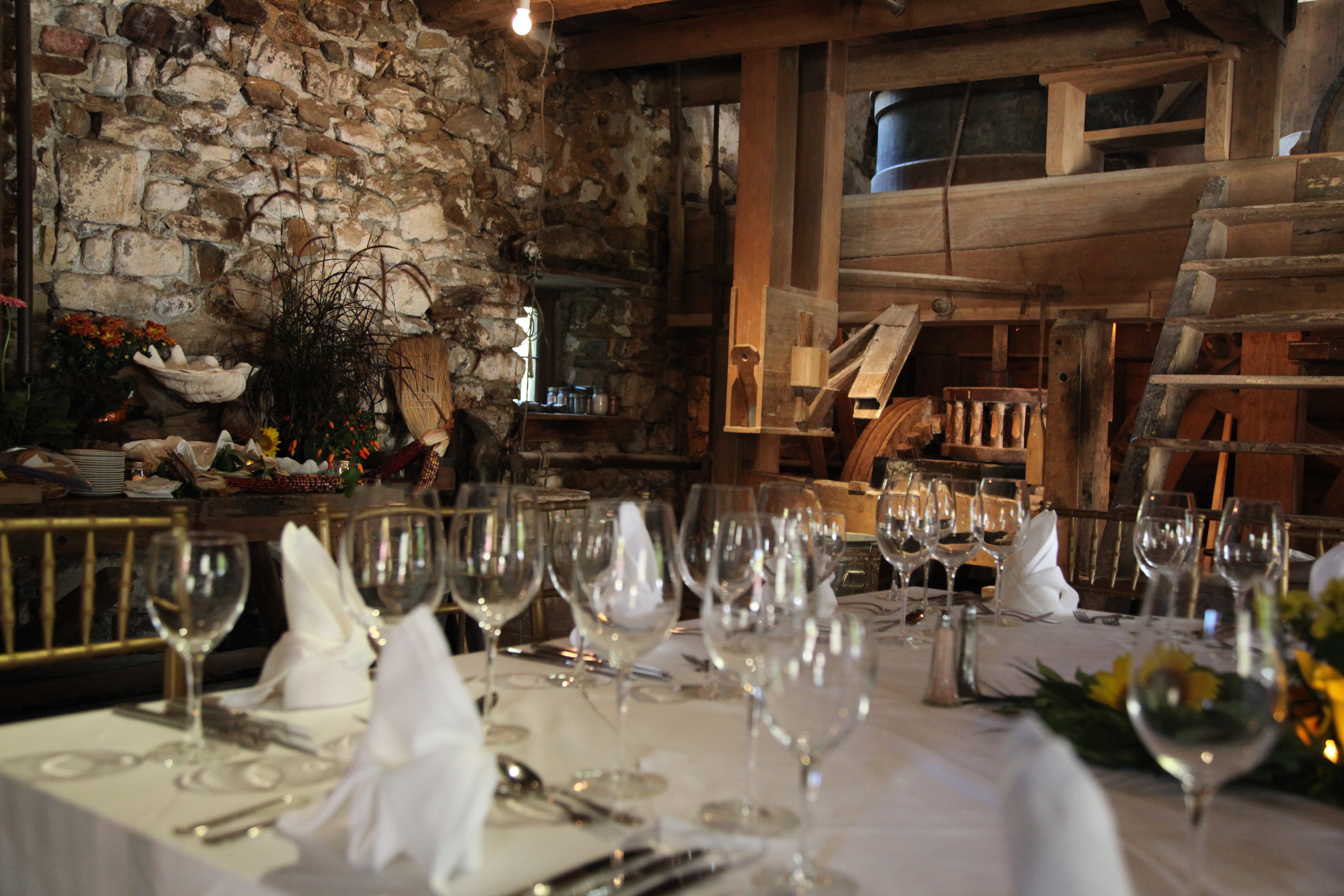
The Mill’s restoration began in 2001. For the restoration of the mill’s structure and machinery, the Mill Trust relied extensively on the craftsmanship of James and Peter Kricker of Rondout Woodworking, Inc. of Saugerties, New York, as well as the knowledge and expertise of historical molinologist Stephen J. Kindig who reviewed plans and drawings throughout the project. Prior to the machinery restoration, Rondout Woodworking assessed the Mill’s structure and made significant structural repairs. Over one-half of the south roof plate, which had rotted significantly, was replaced. Collar ties were repaired using splices. To reinforce two collar ties that had been cut to accommodate the Mill’s machinery at some point in the Mill’s history, Rondout forged wrought iron straps, correcting the structural problem without impacting the machinery.

In 2001, Rondout carefully removed the Mill’s original, rather deteriorated master gear from the Mill’s hurst frame and documented its components. A white oak tree donated in 2000 by a Mill Trust member was used to fabricate the master gear and face gear. Hickory was used to create new cogs for the master gear and face gears, and rounds for the lantern gear and wallowers. Because the oak required two years to dry, the fabrication of the master gear and face gear could not begin until Fall 2002. Once fabricated, Rondout assembled the master gear at the mill and then installed it on the shaft in January 2003.

Rondout reconditioned the Mill’s Oliver Evans-type elevators with new canvas belting and cups based on the originals. They cleaned and reconditioned the Mill’s grain cleaner, barrel hoist, and reconstructed the barrel packer using original components. The remarkably intact bolter received new screening using synthetic material. Hanford Mills Museum’s Robert Grassi dressed the Mill’s feedstones during a very cold week in January 2002. The Mill Trust filmed Grassi demonstrating stone dressing techniques for future educational programming.

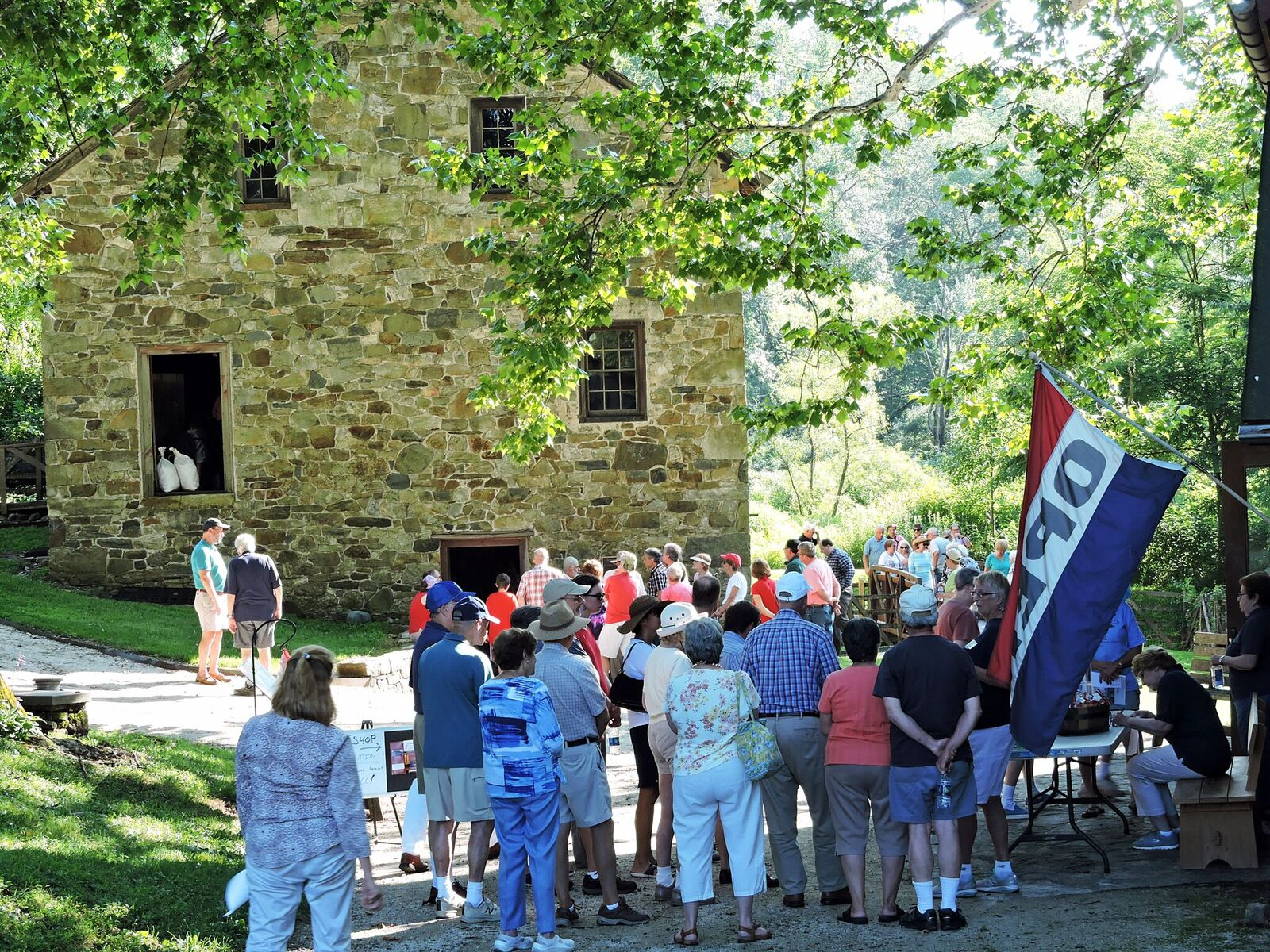
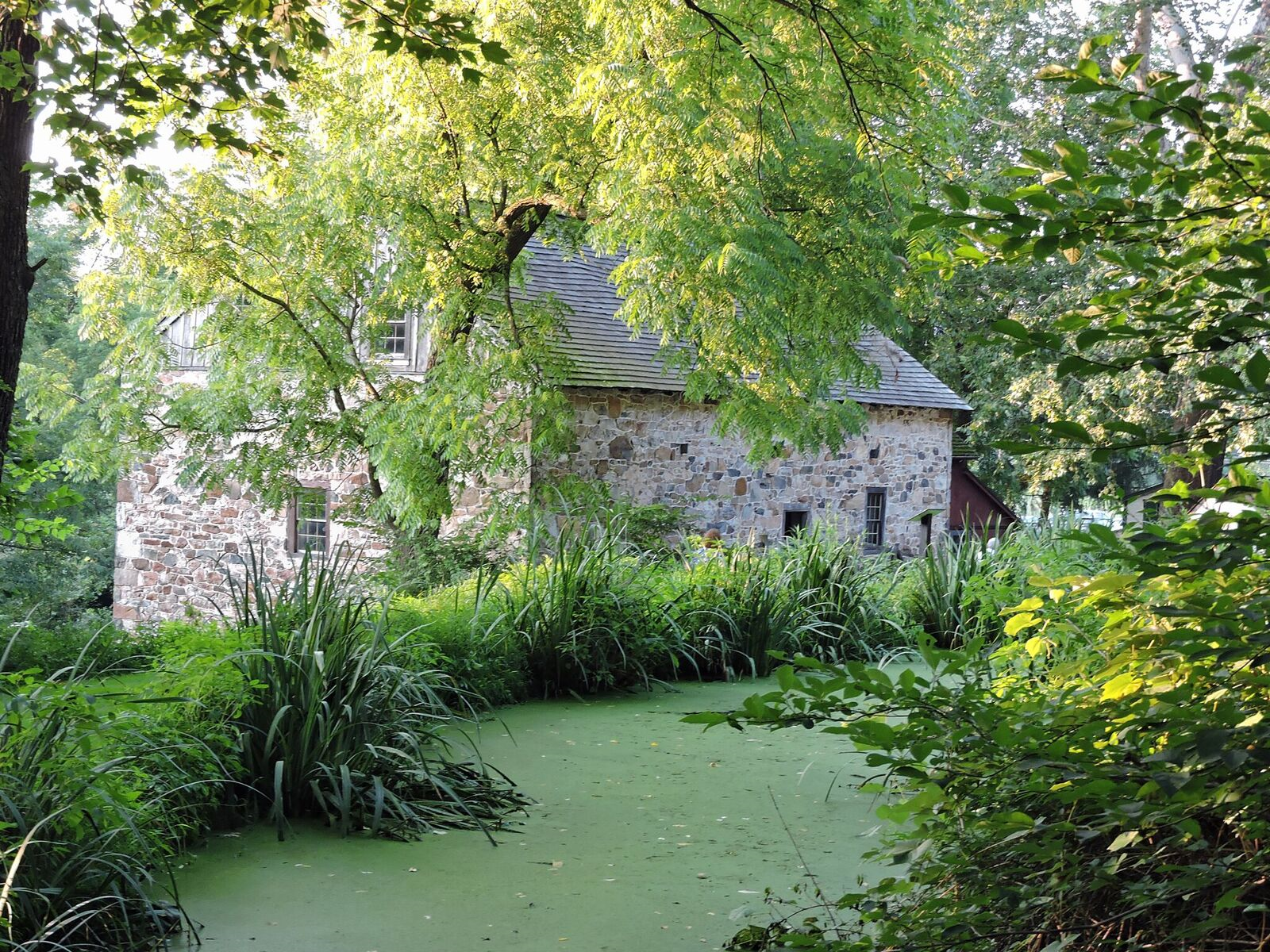
In Fall 2003, the mill’s exterior was restored with the central goal of preserving its raw and weathered character. The exterior woodwork was treated with cuprinol clear preservative, and the masonry was repointed so that the new joints would carefully blend with the existing mortar. A new roof completed the restoration. In an effort to enhance site security, a dry pipe sprinkler system was installed in 2003 to improve the mill’s fire protection. Unobtrusive low voltage lighting now highlights the mill’s historic features while improving visitor safety. Finally, pathways, railings and a bridge enhance visitor safety and improve wheelchair accessibility at the Mill.

The Mill at Anselma Preservation and Educational Trust marked the Mill at Anselma’s return to operation on May 8, 2004 with its Water Wheel Celebration. More than 1200 attended this milestone event.


The Water Wheel

Pottstown Metal Welding Company, under the direction of Plant Manager John Maillie and his staff, and with the careful oversight of Mill Trust Board member and project manager, Jack Brogan, along with the well-respected molinologist (mill historian) Stephen J. Kindig, prepared complete design drawings to produce accurate replicas of the welded "Fitz Water Wheel Assembly" and the "Fitz Forebay and Chute Assembly". The designs were copyrighted by the Mill Trust and represent the only known true replicas in the United States.

Water Wheel at Pottstown Metal Welsing Company


In the fall of 2001, the remnants of the original water wheel and forebay were removed from the Mill and brought to Pottstown Metal’s shop where they would be used as part of the replication process.  The original Fitz shaft and spokes were reused in the restoration. 


After test assembly at the shop, the newly restored water wheel and forebay arrived at the Mill on a flatbed truck, ready for installation. Then came the trickiest part – bringing the 600-pound forebay into the building through the narrow tailrace where the water exits the Mill. 

In the midst of the oppressive August heat, Pottstown Metal’s crew managed to slowly maneuver the forebay into the building with the help of a crane and a great deal of manpower.  Once the forebay was in place, the water wheel’s shaft and spokes were carefully installed. 

The shape of the massive wheel slowly emerged as the bucket segments were attached to the spokes. Now completed and freshly painted, the water wheel and forebay await the restoration of the rest of the Mill’s historic equipment by Rondout Woodworking.

The Mill Trust owes a debt of gratitude to Jack Brogan and Stephen Kindig for their oversight of this project, as well as to the thoughtful suggestions and assistance from Peter and Jim Kricker of Rondout Woodworking. The crew at Pottstown Metal is to be commended for their hard work and craftsmanship shown throughout the project. 


© 2004 The Mill at Anselma Preservation and  Educational Trust  
1730 Conestoga Road - P.O. Box 42 -Chester Springs, PA 19425  
Tel: 610-827-1906 - Fax: 610-827-7345 - Email: info@anselmamill.org
